

Introduction
India’s judicial system has long faced the challenge of delays, case backlogs, and excessive government litigation.
With millions of pending cases across courts, the need for structural reform has become more critical for everyone.
The introduction of the Litigation Policy 2026 India is a significant step toward addressing these kind of legal issues.
This policy is part of a broader transformation under the New Legal Reform India 2026, which focus to modernize the legal structure, reduce unnecessary litigation, and promote quick dispute resolution.
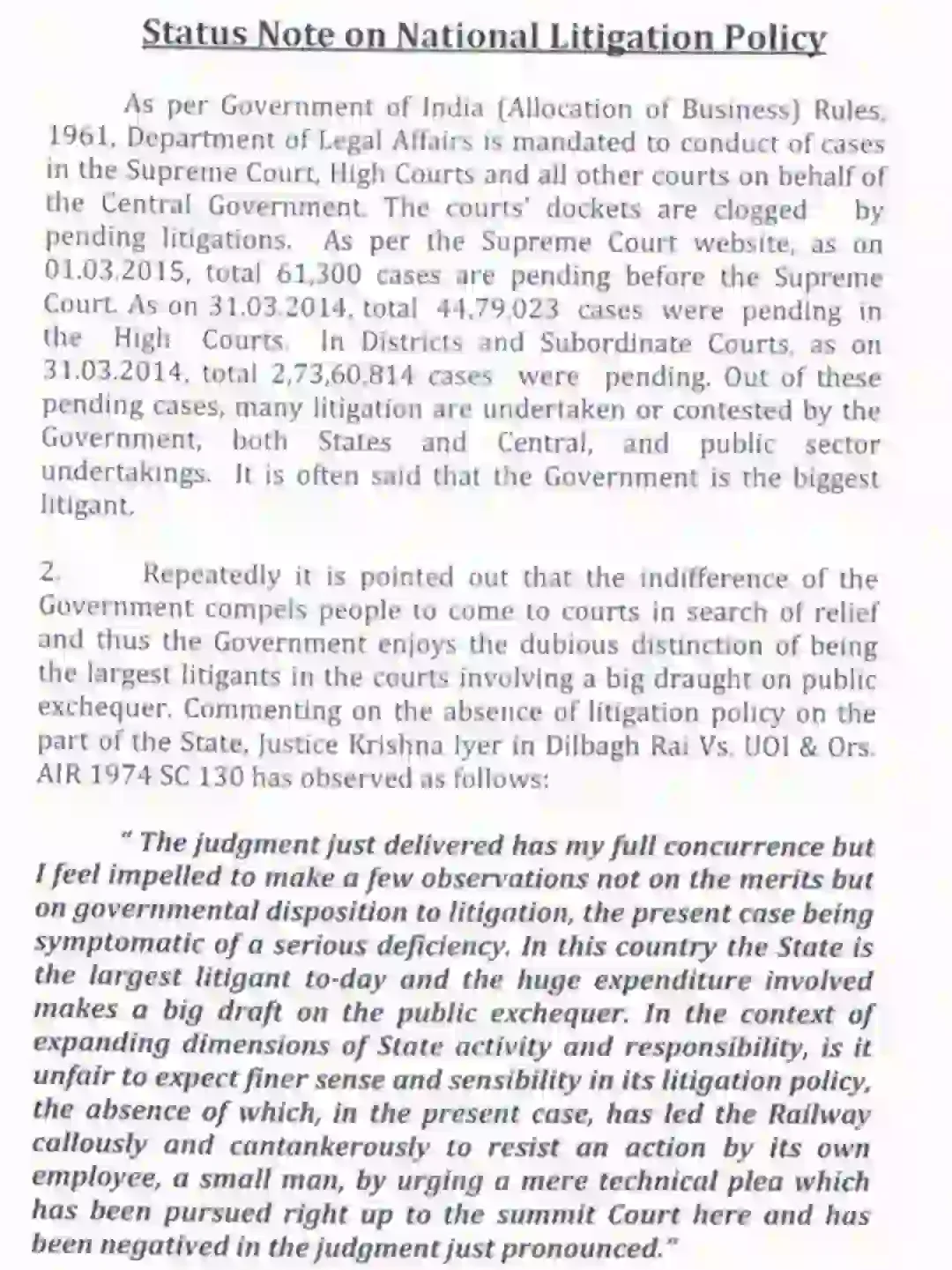
The Government Litigation Policy India 2026 is particularly important because the government itself is one of the largest litigants in the country.
In this guide I will explain you all things step-by-step with detailed analytics and my own research and Perspective.
“Justice delayed is justice denied.” — William Ewart Gladstone
What is Litigation Policy 2026?

The Litigation Policy 2026 India is a comprehensive framework which designed to regulate how government departments control legal disputes or issues.
Its firstly aim is to ensure that litigation becomes the last resort rather than the first step in resolving conflicts.
Under this unique policy, disputes involving government bodies which are expected to go through internal review mechanisms before bring to courts.
This new approach reduces unnecessary cases and promotes faster resolution your pending cases. This policy also introduces strict timelines for govt, accountability measures, and monitoring systems.
In simple terms, this new policy shifts the focus from “litigate everything” to “resolve quickly.”
This change is a core part of the New Legal Reform India 2026, which emphasizes a more practical and citizen-friendly legal approach in the country.
# Check pending cases and much more Here
Main Objectives of New Legal Reform India 2026
The New Legal Reform India 2026 is built on these given key objectives which aimed at transforming the legal landscape:
1. Reducing Case Backlogs
One of the primary goals of this is to reduce the massive backlog of cases by limiting unnecessary litigation, especially by government departments.
Example – A disrupt occur between you and government officier. So, internal committees resolve your disputes before reaching courts.
Impact – Fewer pending cases, faster justice delivery, supports Litigation Policy 2026 India goals.
2. Promoting Alternative Dispute Resolution
Mechanisms such as mediation, arbitration, and Lok Adalats are being encouraged to settle disputes outside courts of India.
Example – If your any Business disputes happen,it can be settled through mediation instead of civil courts.
Impact – It Saves your time and cost, reduces court burden, aligns with New Legal Reform India 2026
3. Enhancing Accountability
Officials responsible for filing unnecessary cases may face problems, ensuring better decision-making by maintaining law & order.
Example – If many accident happens, So Officials are reviewed it then twice before filing unnecessary appeals or cases.
Impact – It Reduces misuse of litigation, ensures responsible decision-making under Government Litigation Policy.
4. Improving Efficiency
Time-bound processes are introduced to ensure faster resolution of disputes.
Example – If you appealed for case, it will Time limits for filing responses and resolving disputes and ensure that this is strictly followed.
Impact – It lead to Faster case disposal, improved workflow and also supports Latest Judicial Reforms.
5. Digital Transformation
The integration of technology, including e-courts and online case tracking, is a major focus.
Example – You can able to access e-courts, online compliment filing, and can access case tracking systems.
Impact – Transparent and quicker process which will strengthens overall Legal System Changes.
These objectives clearly shows the future vision of the Legal System Changes India 2026, which focus to make our India’s justice system more responsive and efficient.
You can Learn— How to File Cyber Crime Complaint ‘Check Now‘
Key Features of Government Litigation Policy India 2026

The Government Litigation Policy India 2026 introduces many practical features that directly impact how legal disputes are handled. These are given below:
- Pre-Litigation Mechanism— Before filing a case, departments must attempt to resolve disputes internally through structured committees.
- Multi-Level Review System— Cases are reviewed at multiple levels to ensure that only genuine disputes reach courts.
- Time-Bound Resolution— Strict timelines are imposed for decision-making, reducing delays.
- Dedicated Nodal Officers— Each department will have officers responsible for monitoring litigation and ensuring compliance.
- Focus on Settlement— Encouraging settlements through mediation and negotiation is a key aspect of the policy.
These features shows how the Litigation Policy 2026 India is designed to bring strictness and efficiency into government litigation works
Major Judicial Reforms & Legal System Changes India 2026
The Latest Judicial Reforms in India 2026 go beyond litigation policy and include several transformative initiatives:
1. Digital Courts and E-Filing
Courts are increasingly adopting digital systems for filing and managing cases, reducing paperwork and delays.
Example— A lawyer in Delhi files a civil case through the e-courts portal without physically visiting the court, uploading documents and paying fees online.
Impact— Filing time reduces from several days to a few hours, travel costs are eliminated, and case registration happens faster, helping courts handle more cases daily.
2. Data-Driven Decision Making
Judicial systems are using analytics to track case progress and identify bottlenecks.
Example— High Courts use case data analytics to identify long-pending cases and prioritize them for faster hearings.
Impact— Old cases get cleared faster, judges can allocate time more effectively, and overall pendency starts decreasing in a measurable way.
3. Strengthening ADR Mechanisms
Arbitration and mediation are being promoted as faster alternatives to traditional litigation.
Example— A property dispute between two families is resolved through Lok Adalat instead of going through years of court litigation.
Impact— Parties save lakhs in legal fees, disputes are resolved within weeks or months, and courts see a visible reduction in civil case load.
4. Faster Insolvency Resolution
Reforms in insolvency laws are helping businesses resolve financial disputes more efficiently.
Example— A small manufacturing company resolves its debt through a simplified insolvency process within 180 days instead of being stuck in court for years.
Impact— Creditors recover money faster, businesses either revive or close quickly, and financial resources are not locked in long legal battles.
5. Simplification of Procedures
Efforts are being made to simplify legal procedures, making them more accessible to citizens.
Example— A consumer files an online complaint for a defective product using a simplified digital form without needing a lawyer.
Impact— More people start using legal remedies, case filing increases at the initial level but resolution becomes quicker, improving trust in the legal system.
| Key Change | Impact |
|---|---|
| Online case filing and virtual hearings | Faster filing, reduced paperwork, saves time |
| Use of analytics for case management | Reduces backlog and improves efficiency |
| Promotion of mediation & Lok Adalats | Quick resolution and less burden on courts |
| Streamlined insolvency process | Improves business environment and faster recovery |
| Easy and online legal procedures | Better access to justice for citizens |
These developments are central to the Legal System Changes India 2026, which aim to create a modern and efficient judicial framework for everyone.
UGC Updates and Status 2026 — Check here
Quick Comparison with Previous Litigation Policy
The earlier litigation policies in India focused mainly on reducing government litigation but lacked strong enforcement mechanisms.
Previous Policy Issues:
- No strict accountability
- Weak monitoring systems
- Lack of timelines
- Limited use of technology
Improvements in Litigation Policy 2026 India:
- Clear accountability framework
- Structured review mechanisms
- Defined timelines for action
- Integration of digital tools
For example, earlier or older policies allowed departments to file appeals without proper scrutiny but the Government Litigation Policy India 2026, required such things to must pass through multiple levels of approval which ensuring that only necessary cases proceed for better decisions.
This comparison highlights how the New Legal Reform India 2026 is more structured and result-oriented.
Previous Policy VS Litigation Policy 2026 India
| Previous Policy | Litigation Policy 2026 India |
|---|---|
| Litigation as first step | Litigation as last resort |
| Easy and frequent government case filing | Strict review before filing cases |
| Limited accountability | Strong accountability of officials |
| No fixed timelines | Defined time-bound actions |
| Minimal use of technology | E-filing and digital tracking systems |
| Court-focused approach | Focus on ADR and settlements |
| Weak case monitoring | Regular monitoring and reporting |
| Slow and delayed process | Faster and structured system |
Our Analytical Example: Tax Dispute Case
To understand the real impact of the Litigation Policy 2026 India, consider a tax dispute scenario:
Before Reform
A business disputes a tax notice:
- Case directly filed in court
- Multiple hearings over several years
- High legal costs
After Reform
Under the new policy:
- Dispute first reviewed internally
- Settlement options explored
- Case goes to court only if unresolved
Outcome
- Faster resolution
- Reduced burden on courts
- Lower costs for businesses
This example reflects the effectiveness of the Latest Judicial Reforms in India 2026 in improving dispute resolution efficiency.
Impact of this reforms on Citizens, Government & Courts
The Legal System Changes India 2026 will have wide-ranging effects which are given below:
For Citizens
- Faster resolution of disputes reduces waiting time from years to months in many cases.
- Lower legal expenses due to mediation and online processes make justice more affordable.
- Simplified procedures and digital access increase participation of common people, especially in rural and semi-urban areas.
For Government
- Reduction in unnecessary litigation lowers legal costs and administrative burden.
- Better accountability ensures officials avoid filing weak or repetitive cases.
- Faster dispute resolution improves public trust and governance efficiency under reforms like Litigation Policy 2026 India.
For Courts
- Decrease in case backlog allows judges to focus on serious matters.
- Digital tools and data-based case management improve productivity.
- Overall, courts become more efficient, transparent, and capable of delivering timely justice.
The Government Litigation Policy India 2026 plays a crucial role in ensuring that these benefits are realized across all levels of the system.
Benefits & Challenges of the New Policy
Benefits
These are the major benefits of this new litigation Policy are given 👇:
- Efficiency: Faster case resolution through strict timelines and reduced procedural delays.
- Cost Reduction: Lower legal expenses for citizens and government due to fewer unnecessary cases.
- Reduced Backlog: Significant decrease in pending cases, easing pressure on courts.
- Accessibility: Easier access to justice with digital filing and simplified procedures.
- Transparency: Better tracking and monitoring of cases increases trust in the system.
- Accountability: Government officials become more responsible before filing litigation.
- Economic Growth: Faster dispute resolution improves business confidence and investment climate.
Challenges
These are the major challenges of it:👇
- Resistance to Change: Government officials may hesitate to adopt new accountability measures.
- Lack of Awareness: Citizens and lower-level authorities may not fully understand new procedures.
- Infrastructure Gaps: Rural areas may face issues with digital courts and e-filing systems.
- Implementation Delays: Coordination between departments can slow down execution of reforms.
- Training Requirements: Judges, lawyers, and officials need proper training for new systems.
- Overdependence on ADR: Not all disputes are suitable for mediation or arbitration.
- Data Security Risks: Increased digitalization raises concerns about privacy and cybersecurity.
Despite these challenges, the New Legal Reform India 2026 has the potential to bring long-term improvements in our india’s judicial system.
Important FAQs Section
1. What is Litigation Policy 2026 India?
It is a reform to reduce unnecessary litigation and improve case resolution speed.
2. Why was this policy introduced?
To reduce case backlog and make the legal system faster and efficient.
3. How does it help citizens?
It ensures quicker justice, lower costs, and easier legal access.
4. What is the role of ADR in this policy?
ADR helps settle disputes quickly without going to court.
5. What are key legal changes in 2026?
Digital courts, faster processes, and simplified legal procedures.
Conclusion
The Litigation Policy 2026 India represents a major shift in how legal disputes are handled in the country like India.
By focusing on efficiency, accountability, and pre-litigation resolution, this policy aims to reduce unnecessary cases which are pending and improve justice delivery for everyone.
Combined with the Latest Judicial Reforms in India 2026, these changes mark a new era for the Indian legal or judicial system.
The Government Litigation Policy India 2026 ensures that the government leads by example in reducing litigation, while the broader Legal System Changes India 2026 make a more modern and citizen-friendly changes.
In the coming years, if it implemented effectively, these reforms can significantly transform India’s judicial system, making it faster, more transparent, and more accessible for everyone.
“The rule of law is the foundation of a functioning democracy, and efficient justice delivery strengthens public trust.” — N. V. Ramana