
Introduction
In the world’s largest democracy like India, it is important for all government works to be transparent.
I also felt that filling RTI(Right to Information) is of great help.
But when I researched about it, I found out that any citizen in India can file an RTI application in less than 10 minutes.
You have to follow some simple steps to fill RTI which will be explained in details below.
In this blog post, I have explained about the RTI application process and also all the points which are more important to know than the RTI application.
Information which cannot be given in RTI
According to RTI Act, 2005 India has now given Constitutional Freedom of Speech and Expression to its citizens.
According to the RTI Act, you can collect legal information but RTI does not allow certain sensitive details.
Generally, you cannot obtain:
- Any information related to National Security
- Sensitive data which received from foreign government
- Personal details of any individual(Right to Privacy)
- Information which protect by court order
- Internal security and intelligence agency records.
- Cabinet papers, including records of Council of Ministers’ deliberations
| Can Be Obtained | Cannot Normally Be Obtained Through RTI |
|---|---|
| Government orders | National security information |
| Budget records | Personal medical records |
| Tender documents | Intelligence agency records |
| File notings | Trade secrets |
| Inspection reports | Ongoing investigation details |
| Work orders | Cabinet deliberations |
Note: RTI exemptions are mainly covered under Section 8 of the RTI Act, 2005.
“RTI empowers citizens with information.”
Documents required for RTI application
That is, the best thing about RTI is that you do not need many documents to fill RTI.
You can upload the basic document and apply immediately:
- Postal address for receiving the reply
- Details of the information you are seeking
- RTI application fee (usually ₹10)
- Copy of a valid BPL certificate/card to claim fee exemption(optional)
You do not need Aadhar card, identity proof, PAN card, etc. for RTI application.
Correct you PAN Card in 5 minutes– Learn Now
How to file rti application online

Indian government has made RTI application even easier through online method.
Just follow my instructions in simple steps and you can file RTI without any delay or problem.
Step 1: Open RTI official Portal
You have to always visit the official portal for any schemes, legal changes, or government work.
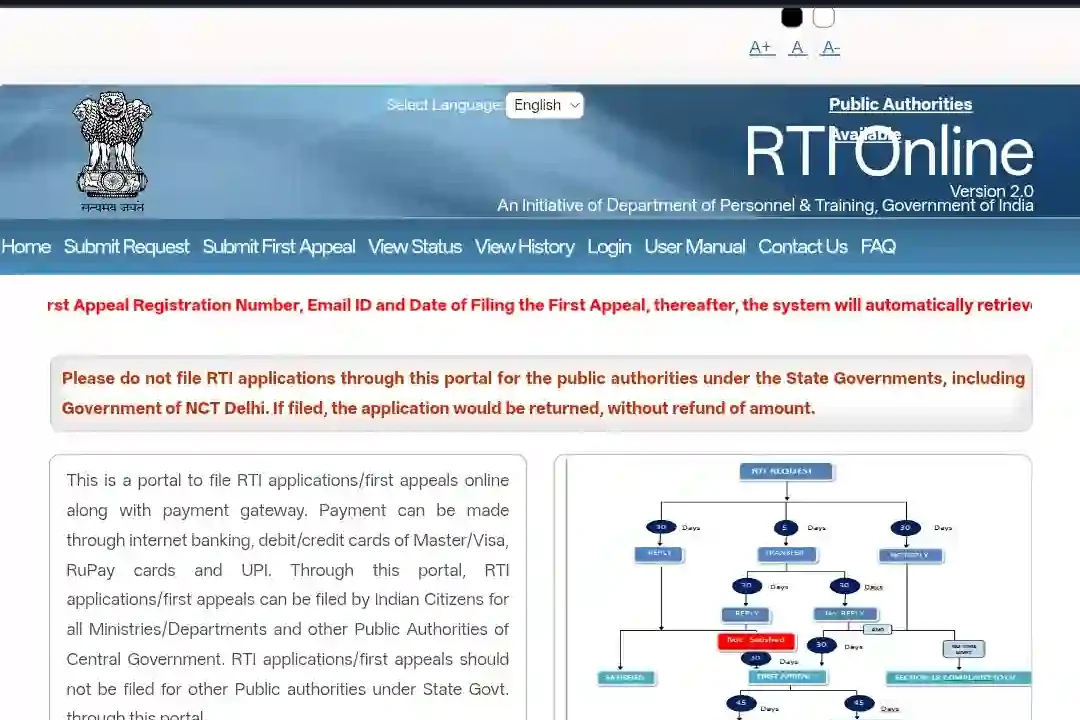
To file RTI you have to visit its official portal “rtonline.gov.in“.
After clicking on this link you will see some such websites.
Step 2: Click “Submit Request”
After reaching the official portal, you will see a “Submit Request” option, you will be able to click on it.
After submitting the request, you will see the official guidelines of RTI application, accept them and click on “submit”.
After accepting the Guidelines, you will be shown the Online RTI Request Form, fill in your email, Phone no., and security code and submit it.
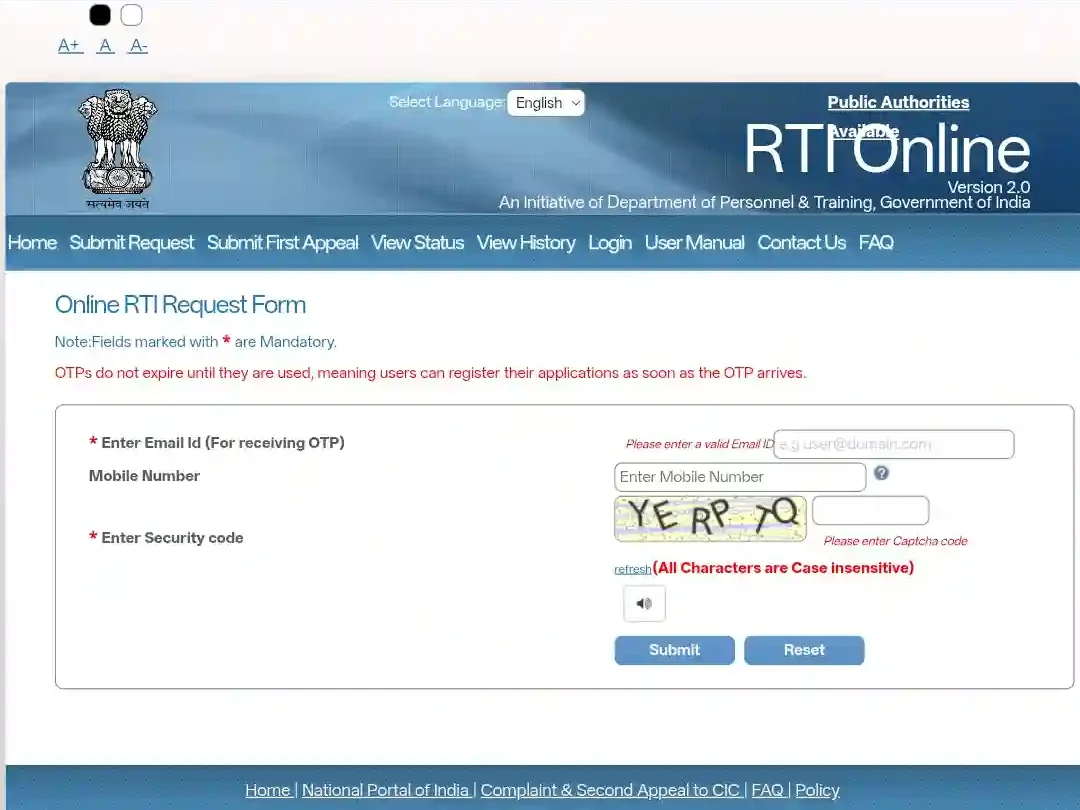
After submitting, OTP will be sent to your email, fill it again and submit.
Step 3: Select Ministry/Department/Public Authority
In this section you simply select which department you want to file RTI.
Like you have to file RTI to know about railway fund, you have to choose your railway department.
If you want, you can use Chatgpt for this.
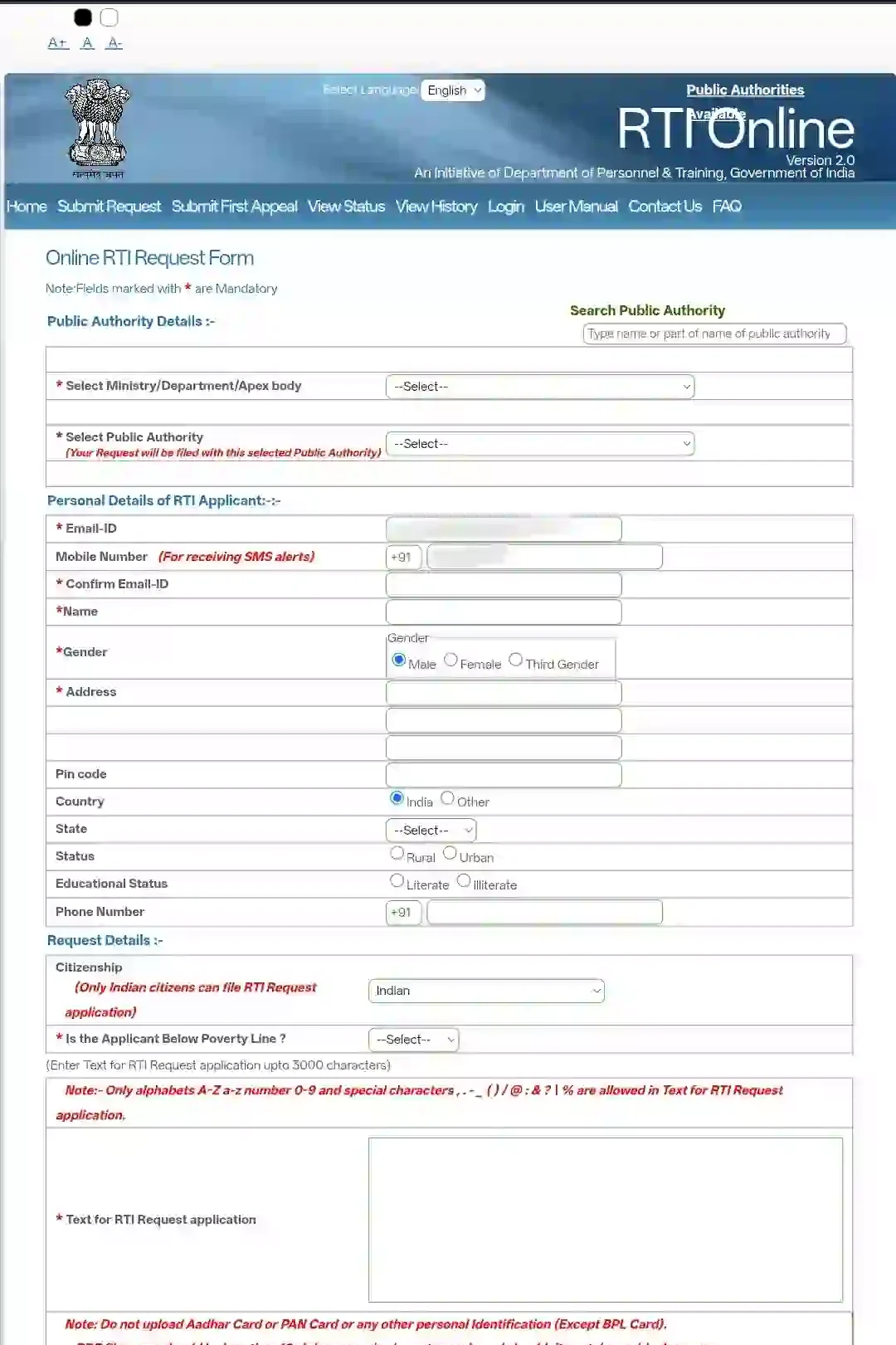
Step 4: Enter Details
After selecting the department, you will have to fill some details in this form.
Details like:
- Name
- Address
- Mobile Number
- Email ID
- Citizenship details
Along with these informations you will also have to give some other information.
*Note- If you come under BPL(Below Poverty Line) then you can use your BPL Card for free and fill RTI.
Step 5: Write RTI Query
On the same page, after filling your details, you will see a section where it is written “Text for RTI request application“.
You have been given a space in front of this text. You have to write any department related query in this space in less than 3000 characters.
Step 6: Pay RTI application Fee
After filling all the details, you will go to the payment page by clicking on submit.
The interface of this page will look like this.
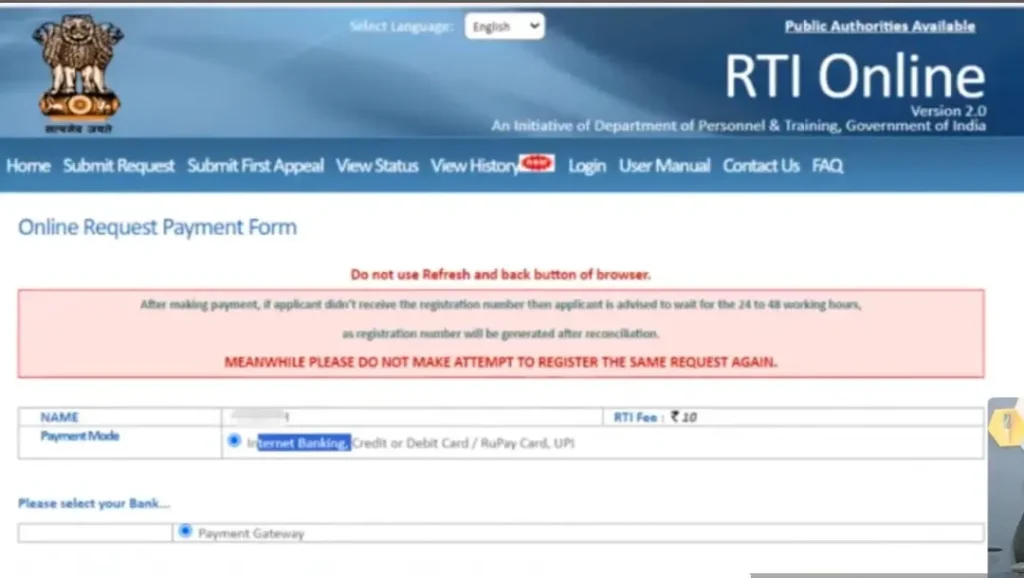
Here you have to pay RTI Application fee(₹10).
Step 7: Submit Request and Get Acknowledgement
After paying the fees you have to submit.
After submitting, you will be shown an Acknowledgment page of this type.
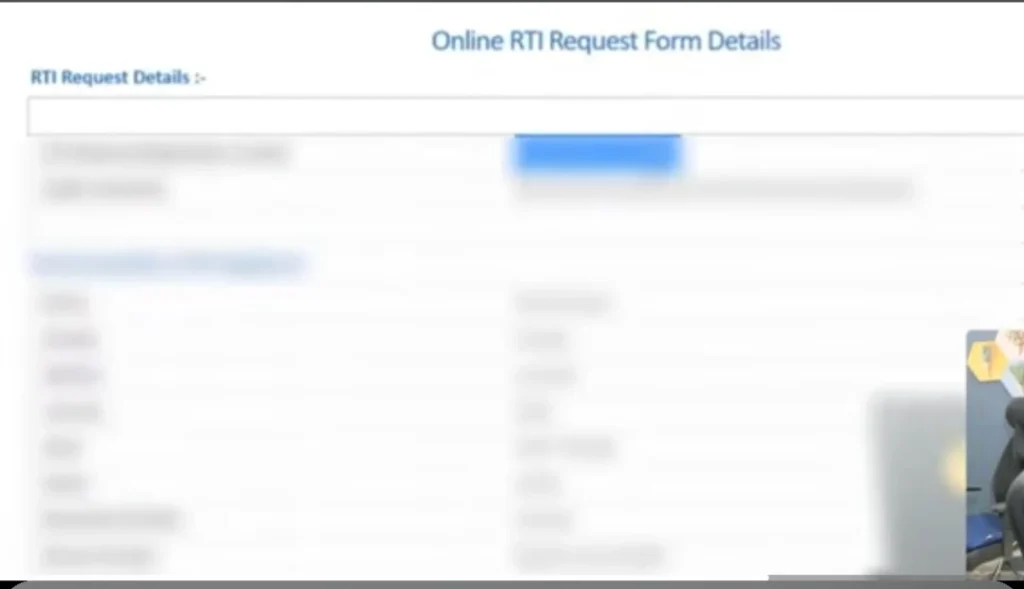
In this page you will be shown all the details which you have filled and you can also save your registration number.
Now that you have filed your RTI application, you can also check its status.
If the first response to your RTI application is not satisfied, you will have to resubmit the RTI application request again.
What to Do If Police Arrest You in India— Know Your Rights
In Which Cases Can an RTI Be Rejected?
How can your filed RTI request get canceled or rejected?
RTI rejection has happened in some special cases.
If you request any RTI application related to these topics, you will not get any response through RTI:
- National security and public safety: If you want to know such information which is related to national security, defence, sovereignty of our country then RTI will be rejected.
- Personal and confidential information: In India, if you want to find out the personal details of any person, it is impossible without public interest.
- Ongoing investigations and court-restricted information: Any person who wants to collect data related to an ongoing case or procedure through RTI is against the RTI rules.
- Commercially sensitive information: RTI application requests containing any type of trade secrets, intellectual property and confidential information will be denied.
- Exempt organizations: You cannot expect any security agency and intelligence information from RTI unless they have committed corruption and human rights violations.
What happens if RTI is late?
As I told you before, RTI does not make sensitive details public.If for some reason your RTI application request is delayed then you can take the following actions:
- You can file a First Appeal
- The delay is treated as a deemed refusal under the RTI Act.
- The Information Commission can take action if the delay is unjustified.(Under Section 20 of the RTI Act, 2005)
- Officials may face penalties for unreasonable delays in providing information.
| Situation | What Happens? |
|---|---|
| Reply received within 30 days | RTI process continues normally |
| No reply within 30 days | Considered a deemed refusal |
| Information delayed | You can file a First Appeal |
| Delay without valid reason | Information Commission may take action |
| Unresolved after appeal | You can file a Second Appeal |
What Is the 30-Day Rule for RTI?
When you submit an RTI request, then the request is passed to the PIO (Public Information Officer).
Under Section 7(1) of the Right to Information Act, 2005, the PIO is required to submit a request and provide information, otherwise the request is rejected for any valid reason.
This is why all PIOs have to be purged within 30 days, that is why they are called 30-Day Rules.
What I Do If No Reply Comes
You can fill your RTI application request but no reply has come yet.
In such a situation, you should not panic or apply again for RTI.
Aapke jagah agr m hota to under Section 19(1) of the RTI Act, 2005 First Appeal file krta.
By filing the first appeal file, I will be able to directly challenge the higher authorities so that they can respond to my RTI application.
Copy of RTI application and Acknowledgment will be required at the time of appeal process.
Common FAQs of RTI
1. Can I file RTI for road construction?
Yes, RTI can be filed to obtain road construction records, costs, and project details.
2. Who is eligible to file an RTI request?
Any Indian citizen can file an RTI request under the RTI Act, 2005.
3. How many days will it take for RTI?
RTI replies are usually provided within 30 days from the application date.
4. How much money is required to file a RTI?
The standard RTI application fee is ₹10 for most public authorities.
5. Can we file RTI against Builder?
RTI cannot be filed directly against private builders unless linked to public authorities.
6. Who is exempt from RTI?
Intelligence and security organizations listed under Section 24 are generally exempt from RTI.
Conclusion
Do you know how important RTI (Right to Information) is to maintain transparency in a democratic country.
As I told you earlier, filling RTI is the right of all citizens, so you can submit the request immediately by following the simple steps given by me.
I have told you all the important things related to RTI in this blog post.
If you learn something new then do tell in the comments.
“Transparency is the foundation of democracy.“
Further Readings:
- Top 5 Changes in New Criminal Law in 2026
- How to Apply Ayushman Card Online