
Introduction
I have noticed that controversies surrounding examinations make headlines every year.
Most competitive exams suffer from paper leaks or contain errors in the questions.
Paper leaks reflect a failure on the part of government authorities.
To address these issues, the National Testing Agency (NTA) has introduced several new reforms which I will discussed here.
“Fair exams create equal opportunities.”
What Is the National Testing Agency (NTA)?
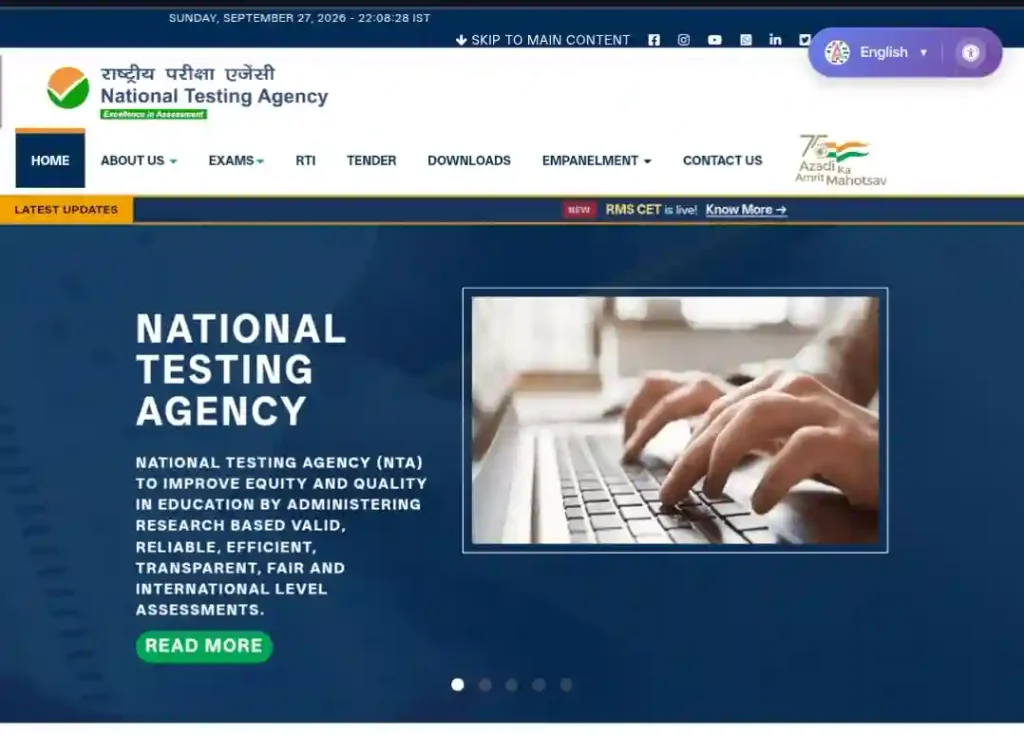
The NTA (National Testing Agency) was established under the Ministry of Education in 2017.
It is an autonomous government organization that also operates under the Ministry of Human Resource Development.
Every year, the NTA shapes the future of over 50 lakh candidates.
You could even call it India’s most important examination body, as the NTA conducts exams for lakhs of students.
Why Were New NTA Reforms Introduced in 2026?
I feel that the new NTA reforms are being introduced to address growing concerns regarding national entrance exams.
This is because I have long observed that candidates face numerous issues related to these entrance exams.
The NTA conducts some of India’s most important entrance exams, such as NEET, JEE Main, CUET, and UGC-NET.
Here is a table showing the Reason behind NTA Reforms:
| Reason | Why It Matters |
|---|---|
| Paper leak controversies | Strengthen exam security |
| Question and translation errors | Ensure fair examinations |
| Re-examinations and cancellations | Reduce student stress and delays |
| Need for stronger governance | Improve accountability and oversight |
| Technology modernization | Enhance security and monitoring |
| Candidate authentication issues | Prevent impersonation and fraud |
| Public trust concerns | Restore confidence in NTA exams |
Latest Key Changes in UGC– Check Here
What Did NTA Say About NEET 2026?

The NTA was compelled to take swift action following protests at Jantar Mantar demanding the resignation of India’s Education Minister.
Heeding the students’ demands, the NTA made an announcement regarding the NEET paper leak.
A look at the official notices reveals that the NTA has taken stringent measures concerning the NEET exam.
Plans are now in place to ensure robust security, enhanced candidate support, and greater transparency for the conduct of NEET (UG) 2026.
The agency states that its objective is to conduct a smooth, fair, and secure examination and that it intends to further improve these processes.
These are just a few key statements; the NTA has made other announcements regarding NEET as well.
What Are the New Rules for Re-NEET 2026?
Following the protests, several new rules have been introduced regarding the re-NEET exam, which are crucial for NEET aspirants to know.
These new rules primarily focus on three key areas:
- Security
- Transparency
- Student trust
These new rules have been introduced to make the examination process trustworthy and student-friendly.
1. Biometric Verification and Exception Protocol
Biometric verification means that all students will undergo fingerprint and identity checks before the exam.
If any issue arises during immediate verification, the Exception Protocol will be implemented.
This decision by the NTA will secure the candidates’ identities and ensure a fair verification process.
This change will enhance the credibility of the examination and make impersonation impossible.
2. Enhanced Security Measures
With a focus on security, the NTA has taken significant decisions that address both security arrangements and monitoring mechanisms.
During the re-examination, any untoward activity will be detected, and individuals involved may be detained if necessary.
To mitigate risks and prevent unfair practices, examination centers will be kept under close supervision.
This will boost students’ confidence, allowing them to take the exam without apprehension.
Additionally, it will become much easier to detect any form of manipulation during the examination.
3. Official WhatsApp Communication

This is my favorite change introduced by the NTA regarding NEET-UG.
Now, you will receive all updates related to NEET-UG directly on the official WhatsApp Channel.
This will help protect students from being misled.
Students will now receive timely and verified information directly from the NTA.
This measure will curb the spread of rumors, fake notices, and misleading social media posts.
4. Platform to Report Suspicious Claims
An official NTA webpage will be introduced.
On this platform, any NEET aspirant will be able to report fake notices, scams, or suspicious claims related to the exam.
This will serve as an official channel for students to verify information and report suspicious activity.
This measure will enable the rapid detection of fake documents and misinformation.
Learn Process: Filing FIR in just 5 simple Steps
5. OMR Transparency and Answer Key Challenge
The NTA has decided to make the OMR answer sheets public.
You can now view your OMR answer sheet, recorded responses, and the provisional answer key at any time after the exam.
This measure will help students track their answers and prepare for the future.
It will build candidate trust regarding the results and facilitate the easy resolution of disputes related to transparency.
What Is the Anti-Paper Leak Law?
Anti-Paper leak law falls under Public Examinations (Prevention of Unfair Means) Act, 2024.
This law came into force on June 21, 2024.
Under the anti-paper leak law, all public examinations will be protected against leaks, organized cheating, exam fraud, and other unfair practices.
Key Offences Covered Under this Law
- Question paper leaks
- Answer key leaks
- Impersonation and cheating assistance
- OMR sheet tampering
- Merit list manipulation
- Hacking exam systems
- Fake websites and admit cards
How NTA exam reforms will affect NEET and JEE 2027
The NTA has introduced these reforms to shape the NEET and JEE exams scheduled for 2027.
Without making any changes to the syllabus or eligibility criteria, the government will focus solely on security and transparency.
These reforms will impact NEET 2027 and JEE 2027 in the following ways:
| Reform Area | Expected Impact on NEET & JEE 2027 |
|---|---|
| Enhanced Security | Better protection against paper leaks and malpractice |
| AI-Based Monitoring | Faster detection of suspicious activities and irregularities |
| OMR & Answer Key Transparency | Greater trust in evaluation and results |
| Staff Training Programs | Improved exam management and fewer administrative errors |
| Stronger Exam Centres | More secure and standardized testing environment |
Nandan Nilekani Committee and Future Exam Reforms
The issues observed in examinations across India point to a major failure.
Consequently, the Central Government has constituted a High-Powered Task Force (HPTF) to strengthen the examination system.
The HPTF is chaired by Nandan Nilekani, the co-founder of Infosys.
This task force will explore ways to make examinations in India more secure, transparent, and accessible.
It will also address the problem of paper leaks.
Benefits of NTA Reforms for Students
The reforms done by NTA have many benefits.
- Better Exam Security: Helps reduce paper leaks and unfair practices.
- Fair Evaluation Process: Increases confidence in results and rankings.
- AI & Biometric Verification: Prevents impersonation and identity fraud.
- Greater Transparency: Provides better access to answer keys and OMR records.
- Faster Grievance Resolution: Helps students get quicker responses to complaints.
- Improved Exam Centres: Creates a safer and more organized exam environment.
- Stronger Accountability: Encourages a more reliable and trustworthy examination system.
Challenges That Still Need Attention
Even though the government has introduced new rules to prevent paper leaks, fair examination remains a challenge for NTA.
- Translation Errors: Mistakes in regional-language papers can affect candidate performance.
- Rural Exam Infrastructure: Some centres still lack adequate facilities and resources.
- Cybersecurity Risks: Digital examination systems require continuous protection from cyber threats.
- Grievance Redressal Delays: Faster resolution of student complaints is still needed.
- Misinformation on Social Media: Fake notices and rumours can create confusion among candidates.
Top 6 FAQs related to Re-NEET
1. Is 2026 Re-NEET hard?
Re-NEET difficulty is expected to remain similar to the original NEET syllabus and pattern.
2. What are the latest news on NEET 2026?
NTA conducted Re-NEET 2026 after cancellation and introduced stronger security and transparency measures.
3. Should I apply again for Re-NEET 2026?
No, existing candidate details were carried forward automatically; fresh registration was not required.
4. What is the new rule for NEET?
New measures include biometric verification, enhanced security, transparency, and official communication channels.
5. Is re-registration required for NEET?
No, NTA confirmed that candidates did not need to register again for Re-NEET 2026.
6. What are the dates for Re-NEET?
NTA announced Re-NEET 2026 on 21 June 2026 following the exam cancellation.
Conclusion
Education is a primary driver of development in any country.
Public examinations shape your future, so it is crucial that they should be conducted fairly.
Government reforms have been introduced to make exams secure, transparent, and accessible.
It is essential for everyone to be aware of these new NTA rules.
You can follow my blog for more information on this topic.
“Secure exams build student trust.”
Further Readings: